Skip-free clearance alternatives for tight Paddington streets
Posted on 18/06/2026
If you have ever tried to arrange a clear-out in Paddington, you already know the problem: lovely period streets, narrow access, busy kerbs, and not a lot of patience for a giant skip sitting outside for days. That is exactly why skip-free clearance alternatives for tight Paddington streets make so much sense. They are often faster, cleaner, and easier to manage when space is limited or parking is awkward.
This guide breaks down the practical options, how they work, who they suit, and what to watch out for. Whether you are clearing a flat near Praed Street, dealing with bulky furniture after a move, or tidying up after building work, the right method can save time, stress, and a few headaches. To be fair, sometimes the simplest solution is not the big one.
We will also look at local considerations, useful service types, and the small planning steps that make a big difference in tight streets. If you want a broader view of available help, it can also be useful to look at the site's services overview alongside this article.

Why Skip-free clearance alternatives for tight Paddington streets Matters
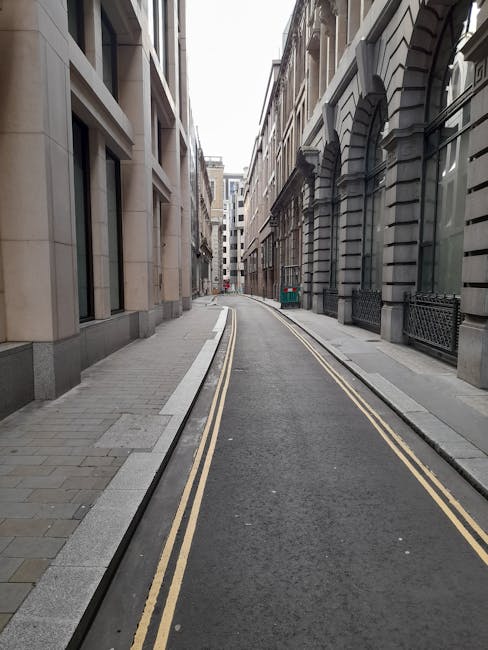
Paddington is one of those places where the street layout quietly shapes everyday decisions. Terraced conversions, mansion blocks, mews lanes, one-way roads, loading restrictions, shared entrances, and low tolerance for obstruction all add up. A skip may seem like the obvious choice at first glance, but in a tight street it can quickly become the least practical option.
There is also the visual side of it. A big skip outside a building can affect neighbours, block sightlines, attract misuse, and make access harder for everyone else. On a narrow road, even a short job can turn into a chain reaction: delivery vans struggle, residents cannot pass easily, and the whole street feels squeezed. You notice it more in Paddington because the streets are already working hard.
Skip-free alternatives are designed to fit real access conditions. They reduce the need for a long permit-heavy set-up, and they can often be organised around your schedule rather than the other way round. That is especially helpful if you are working around estate agent viewings, move-out dates, landlord deadlines, or a building project with a tidy finish line.
A practical example: if you are clearing out a first-floor flat after a tenancy ends, and the staircase is narrow with no easy front loading space, a wait-and-load or man-and-van style clearance may be far more sensible than waiting for a skip permit and then hoping the pavement stays clear. In Paddington, flexibility usually wins.
How Skip-free clearance alternatives for tight Paddington streets Works
Skip-free clearance is a broad phrase, but in simple terms it means removing waste without leaving a stationary skip outside your property. Instead, the waste is loaded directly into a vehicle, moved in stages, or collected in a way that keeps the street clear.
The main methods usually include:
- Wait-and-load clearance: a vehicle arrives, waste is loaded quickly, and the team leaves with everything on board. This is often useful where parking is limited.
- Man-and-van collection: one or more operatives collect items from inside the property, garden, basement, or communal area and load them straight into the vehicle.
- Scheduled clearance by item type: useful for mattresses, furniture, office furniture, builders' rubble, garden waste, or mixed household waste.
- Partial clearances: ideal when you only need certain bulky items removed, not a full property clear-out.
The process tends to be more direct than skip hire. You book a time, explain what needs removing, and the team estimates the vehicle space and labour required. In many cases, the crew comes with the right tools for carrying, dismantling, and sorting items on site. That is the part people overlook. It is not just transport; it is handling, lifting, separating, and making the job tidy as you go.
If the job involves a larger property or a more sensitive clearance, such as after a sale or an office move, a dedicated service like house clearance in Paddington or office clearance support can be a better fit than a one-size-fits-all approach. Same street, different problem, different solution.
When the clearance includes general mixed waste rather than a single item type, a waste clearance service is often the cleanest route. For renovation debris, a builders waste disposal option may be more appropriate.
Key Benefits and Practical Advantages
The main appeal is obvious: you avoid putting a large container into a tight street. But the real benefits go a bit deeper than that.
- Less disruption: no skip sitting outside for days, and less chance of blocking neighbours or deliveries.
- Better for awkward access: basement flats, upper floors, narrow hallways, and internal courtyards are easier to work with.
- Faster turnarounds: useful for last-minute move-outs, refurbishments, or end-of-tenancy deadlines.
- More precise removal: you only remove what needs going, which can feel less wasteful and more organised.
- Cleaner streetscape: especially important in residential areas with heavy foot traffic and limited kerb space.
- Reduced risk of skip misuse: no overnight fly-tipping inside an unattended skip, which is a real nuisance in busy urban areas.
There is also a psychological benefit. A skip can make a property look like a building site before the work has even started. Skip-free clearance often feels calmer. The job happens, the clutter goes, and the street is left looking normal. Quietly efficient. That is a good thing.
For households in the middle of a move, pairing clearance with local moving or sales timing can reduce friction. If you are planning a property transaction nearby, the insights in Paddington home sales and purchases and smart real estate purchases in Paddington can be a useful read alongside your clearance plans.
Who This Is For and When It Makes Sense
Skip-free alternatives are not just for people with no space. They are for anyone who wants a practical, controlled clearance process.
This approach makes sense if you are:
- living on a tight residential street with limited kerb access
- in a flat with no private driveway or front garden
- clearing bulky furniture after a move
- disposing of renovation debris from a small project
- emptying a rental before a handover
- tidying a commercial unit, studio, or office space
- removing a few large items rather than filling a whole skip
It is also a strong option if neighbours are sensitive to disruption. In Paddington, that matters. Some streets are busy from early morning, and some buildings have shared entrances where keeping the route clear is simply the decent thing to do. You know the sort of place where someone is always coming through with a buggy, a pram, a parcel trolley, or a takeaway bag. The street never really stops moving.
For example, if you have a single bulky mattress and a wardrobe taking up half a room, a targeted item collection is likely far more practical than a skip. If you need a quick reference point, the article on urgent mattress removal near Sheldon Square is a good illustration of how these jobs are often handled.
Step-by-Step Guidance
Here is the simplest way to plan a skip-free clearance without making it harder than it needs to be.
- List what needs removing
Start with a rough inventory. Separate bulky furniture, electrical items, general rubbish, garden waste, and builder's debris if needed. The more specific you are, the easier it is to choose the right method.
- Check access carefully
Measure the hallway, stairwell, side passage, or loading point if access is tight. A quick look at dimensions can prevent a lot of hassle later.
- Sort reusable from disposable
Keep anything you want to sell, donate, or reuse away from the clearance pile. Once it is mixed, decisions get messy fast.
- Choose the right removal method
Small load? Wait-and-load may be enough. Heavy items from inside the property? Man-and-van is often better. Mixed contents from a flat or office? A clearance team may be the most efficient route.
- Ask about dismantling
Wardrobes, beds, desks, and shelving often move more easily once taken apart. That can make a tight staircase feel much less like a puzzle.
- Prepare the route
Clear doors, hallways, and entrances before the crew arrives. A 10-minute tidy can save 30 minutes of awkward carrying.
- Confirm what happens to the waste
Good operators should be able to explain sorting, recycling, and disposal in plain English. If the answer sounds vague, ask again.
A small aside here: in our experience, the best jobs are the boring ones. Clear list, clear access, clear expectation. Not glamorous, but lovely when it all runs smoothly.
Expert Tips for Better Results
A few practical adjustments can make a skip-free clearance much easier in a place like Paddington.
- Book around traffic and parking pressure: early mornings can be easier on narrow streets, but always factor in local patterns and building rules.
- Take photos before booking: images of the items, stairwell, and access route help estimate labour and vehicle size more accurately.
- Bundle similar items together: a single pile of furniture, for example, is easier to manage than a scattered selection throughout the flat.
- Plan for heavy lifts: if there are safes, white goods, cast iron items, or large cabinets, mention them early. Do not spring surprises on anyone. Nobody loves that.
- Check whether partial clearance is enough: you may not need a full property clearance if only one room or one category of waste is the issue.
- Choose a team that understands urban access: Paddington's streets can be awkward, and that is not the place for guesswork.
If the job follows a home sale or new purchase, it may help to read a little about the local moving context too. Local insights on living in Paddington and embrace the quaint beauty of Paddington London both give a good sense of the area's rhythm and housing character.
Common Mistakes to Avoid
The biggest mistake is assuming all clearance jobs can be handled the same way. They cannot. A small flat clearance and a light refurbishment waste load are different animals.
- Underestimating access: a clearance that looks simple on paper can become difficult if the stairwell is narrow or the parking is far away.
- Overfilling the job scope: people sometimes think they can clear "a bit of everything" without saying what that means. It usually means delays.
- Leaving sorting too late: if you want to keep documents, valuables, or reusable items, separate them before the team arrives.
- Ignoring building rules: some flats and managed buildings have requirements around lift protection, access times, or loading areas.
- Choosing the wrong waste category: mixed waste, garden waste, and construction debris can all need different handling.
- Focusing only on price: cheapest is not always best if the team lacks experience with tight access or needs multiple return trips.
One more thing. If you are dealing with an awkward corner property or a street like Praed Street, do not assume the first arrangement you think of is the right one. Sometimes the more compact plan is the smarter plan. There is a reason Praed Street rubbish removal services in Paddington get such specific attention: access conditions really do shape the job.
Tools, Resources and Recommendations
You do not need a huge toolkit, but a few basics help.
- Measuring tape for hallways, door widths, and lift access
- Marker labels for keep, donate, recycle, and remove piles
- Protective gloves for broken or dusty items
- Furniture blankets or wraps if items pass through tight internal routes
- Phone photos to show the waste clearly when requesting a quote
For service planning, it can help to review the company's public information pages on pricing and quotes, insurance and safety, and recycling and sustainability. Those pages are useful if you want to understand how jobs are quoted, handled, and sorted.
And if you are checking the broader business background before booking, the company's about us page can help with trust-building context. For payment comfort, payment and security is worth a look too. These are the sort of details people often skip, then wish they had not.
Law, Compliance, Standards, or Best Practice
Clearance and waste handling in the UK should be approached carefully. You do not need to become an expert in waste law to make a sensible booking, but you should expect clear, responsible behaviour from any provider.
At a practical level, good practice usually means:
- items are collected responsibly and not simply dumped elsewhere
- waste is sorted where possible for recycling or recovery
- hazardous or specialist items are identified before removal
- access arrangements do not create avoidable obstruction or risk
- you receive clear information about what is included and what is not
For householders, the important thing is to avoid handing waste to someone who cannot explain where it is going. You want a straightforward service that aligns with normal UK expectations around safe handling, duty of care, and lawful disposal. No drama, no mystery van, no awkward surprises later.
If you are clearing a property before a sale, letting inspection, or business handover, it is also wise to keep records of what was removed and when. That can be helpful if anyone asks later. It does not need to be fancy. A couple of photos and a written note can do the job.
Options and Comparison Table
Here is a simple comparison of the most common skip-free clearance alternatives for tight Paddington streets.
| Method | Best for | Strengths | Limitations |
|---|---|---|---|
| Wait-and-load | Quick removals with limited parking | No skip left outside, fast turnaround | Requires good timing and efficient loading |
| Man-and-van | Bulky items, flat clearances, mixed loads | Flexible, can handle internal carrying | May be slower for larger volumes |
| House clearance | Full or partial property emptying | More comprehensive, less decision fatigue | Needs clearer planning and access |
| Office clearance | Desks, chairs, files, general business waste | Useful for commercial handovers and refurbishments | May involve sensitive items or staged removal |
| Waste clearance | Mixed waste from homes or small projects | Versatile and practical | Not ideal for highly specialised waste streams |
| Builders waste disposal | Renovation debris, rubble, and offcuts | Good for construction-heavy jobs | Should be specified clearly to avoid confusion |
For many Paddington residents, the decision is not about choosing the "best" method in theory. It is about matching the method to the building, the street, and the deadline. That is the real trick.
Case Study or Real-World Example
Imagine a second-floor flat near Little Venice with a narrow communal staircase, no private drive, and a moving date on Friday morning. The property owner needs to remove a broken sofa, a bed frame, two bookcases, assorted boxed clutter, and some old kitchen bits. A skip would be awkward at best and likely frustrating for the neighbours.
Instead, a skip-free approach makes more sense. The items are listed in advance, the route is checked, and the furniture is dismantled where needed. The team arrives with the right vehicle space and enough hands for the stairs. The job is completed in one visit, and the communal hallway is left clear. No skip sat outside for a week. No blocked pavement. No faff.
That same logic applies to smaller jobs too. For instance, a resident in the Sheldon Square area might just need a mattress gone quickly before a landlord inspection. Or a family near Norfolk Square may need a bulky item pickup after replacing old furniture. These are the kind of routine jobs where a nimble, skip-free method saves energy and keeps the street tidy.
It sounds simple because it is. But simple done well is still expertise.
Practical Checklist
Use this quick checklist before booking your clearance:
- Have I listed every item that needs removing?
- Have I separated keep, donate, recycle, and remove piles?
- Do I know whether the access route is narrow, shared, or time-restricted?
- Have I measured any key doorways, stairs, or lift access points?
- Do I need furniture dismantling or special handling?
- Is this a full clearance, partial clearance, or single-item removal?
- Have I checked whether the waste includes builders' debris, garden waste, or mixed household waste?
- Have I shared photos if the items are bulky or awkward?
- Do I know the preferred date and time window?
- Have I asked how the waste will be sorted or disposed of?
If you can tick most of those off, you are in good shape. If not, no panic. A little more prep is usually enough to make the job manageable.
Conclusion
For Paddington's tighter streets, skip-free clearance alternatives are not a compromise. In many cases, they are the smarter, neater, more street-friendly solution. They reduce disruption, fit awkward access better, and help you clear space without turning your road into a temporary storage yard.
The best approach depends on your property, your waste type, your timing, and how much handling the job needs. Once you look at those four things honestly, the right option usually becomes obvious. And when it does, the whole process gets calmer very quickly.
Get a free quote today and see how much you can save.
If you are still weighing up the options, take one more slow look at the access, the volume, and the deadline. That small pause often saves the biggest headache. And really, in a place like Paddington, a clear street and a clear plan go hand in hand.



 Tipper Van - Waste Clearance and Rubbish Removal Prices in Paddington, W2
 Luton Van - Waste Clearance and Rubbish Removal Prices in Paddington, W2